Shopping for a used car in Armstrong County becomes easier with the right local research. This page focuses on used car market research in Armstrong PA, helping you compare prices, understand supply and demand, and spot the best values across segments like compact cars, family SUVs, work trucks, and affordable commuters. We explain how regional factors influence pricing, how to evaluate condition beyond mileage alone, and how to read a vehicle history report alongside a thorough inspection. You will also learn how Pennsylvania taxes and title fees affect your out-the-door number so your budget stays on target. Use this guide alongside our live listings and past sales to find fair comps and negotiate with confidence. Explore real inventory data, typical price ranges, and seasonality trends specific to Western Pennsylvania so you can drive home a vehicle that fits both your needs and your budget.
Ready to compare real examples right now Visit used-inventory and browse recent sales on sold-inventory. For deeper tips, see blog and meet our team at bios.
Use this Armstrong County market guide to quickly narrow options, set a research based target price, and avoid surprises at signing. Check live listings on used-inventory, review local comps via sold-inventory, and learn smart shopping tactics on blog. If you have questions about a specific VIN, fees, or paperwork, connect through contact-us. For policies, see visitor-agreement and privacy-policy.
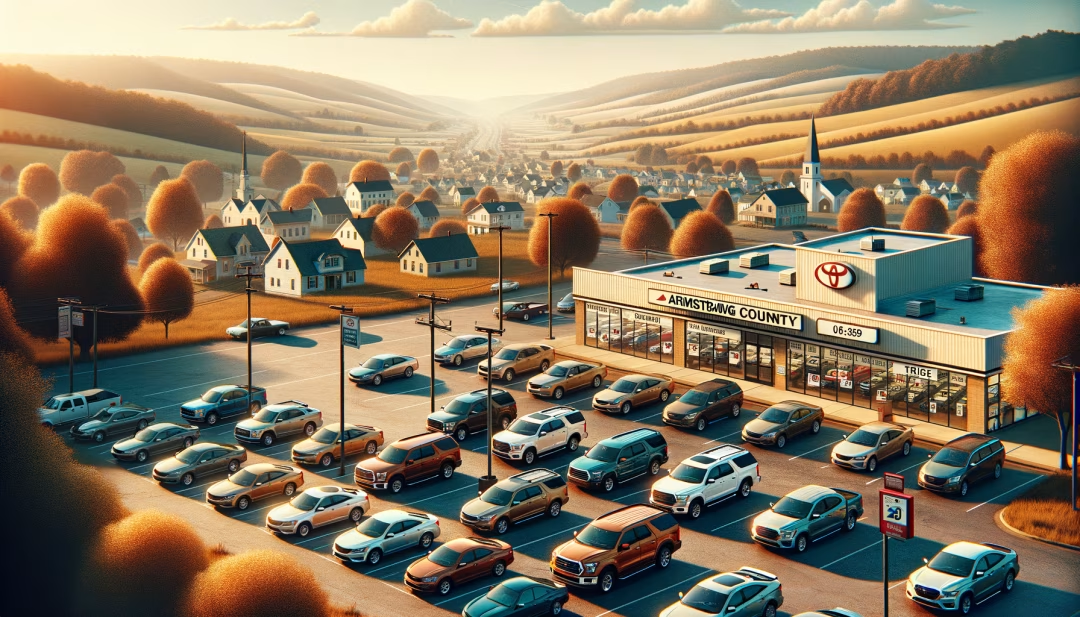
Armstrong County buyers shop in a regional market that overlaps with Kittanning, Ford City, Leechburg, Freeport, and commuter corridors into Allegheny, Butler, and Westmoreland counties. Prices reflect local demand for all wheel drive SUVs, reliable sedans for commuting, and light duty trucks for work and recreation. Inventory flow can tighten during winter and early spring when buyers prioritize traction and ground clearance, then broaden near late spring and early summer as trade ins and off lease vehicles hit the market.
In this region, condition and maintenance history carry more weight than model year alone. Vehicles with clean underbodies, complete service records, newer tires, and no warning lights routinely command a premium. On the other hand, high mileage is not automatically a deal breaker if the vehicle shows consistent care and passes a thorough inspection. Your goal is to measure value holistically: price, miles, ownership history, options, accident history, and reconditioning quality.
Start with two data sources on our site. First, scan current availability on used-inventory. Then, check real world benchmarks on sold-inventory. Comparing similar vehicles across both pages helps establish a realistic target price and highlights which trims and drivetrains move fastest in Armstrong and neighboring counties. If you want extra context on purchase planning, browse blog for negotiation tips, inspection checklists, and budgeting frameworks. Learn about our team and process at about-us and bios, and reach out anytime at contact-us.
Budgeting should reflect the total cost to own, not just the list price. Consider the down payment you are comfortable with, projected monthly payment, insurance, fuel, maintenance, and registration expenses. Pennsylvania sales tax is typically 6 percent. Some counties add local tax such as Allegheny and Philadelphia, so verify your final rate. Title, registration, and documentation fees vary. Ask for a detailed buyer order that lists every line item in plain language before you commit.
If you are exploring credit rebuilding paths, review nearby educational resources like second-chance-auto-financing-allegheny-pa, second-chance-auto-financing-butler-pa, and second-chance-auto-financing-westmoreland-pa. Understanding approval tiers and how down payment, income stability, and vehicle choice affect approvals can help you secure a payment that fits your plan.
The most reliable comp is a comparable vehicle sold in your immediate region under similar conditions. Match year, trim, drivetrain, mileage, condition notes, and add-ons. Use sold-inventory to spot recent real prices and then verify how the subject vehicle stacks against that baseline. Cross check with active listings on used-inventory to understand current supply pressure. A vehicle priced higher than peers may still be fair if it shows better tires, brakes, maintenance proofs, or rare options. Conversely, a below market list price often signals higher miles, cosmetic flaws, or upcoming maintenance needs. Balance it all.
Pair the history report with a mechanical inspection. Confirm there are no warning lights, and that brakes, suspension, steering, HVAC, and electronics function as intended. Inspect the underbody for corrosion, seepage, or frame repairs. Even strong history reports do not replace hands on verification.
Compact sedans and hatchbacks remain budget leaders for students and daily commuters. Popular picks include Toyota Corolla, Honda Civic, Hyundai Elantra, and Chevrolet Cruze. Value drivers are fuel economy, low maintenance costs, and simple ownership. Small and midsize SUVs like Honda CR V, Toyota RAV4, Subaru Forester, Ford Escape, and Chevrolet Equinox hold value well due to all weather usability and cargo space. Proper maintenance on Subaru AWD and evidence of regular CVT or transmission service can be especially important. Pickup trucks serve contractors and outdoor enthusiasts. For Ford F 150, Chevrolet Silverado, and Ram 1500, pay close attention to frame condition, bed rust, and tow package equipment. A clean undercarriage with documented maintenance can justify a higher ask in Armstrong County. For budget buyers, older models with straightforward drivetrains and recent brakes tires can still be smart choices when priced against local comps.
Insurance premiums in Armstrong County vary by vehicle class, driver profile, and claims history. Safer vehicles with abundant parts availability and lower theft rates often cost less to insure. Request quotes on a few VINs during your research phase. Consider total cost over 3 to 5 years, not just the purchase price. Budget for fluids, tires suitable for Pennsylvania winters, alignment checks, and brakes. Scheduling a baseline service right after purchase can stabilize costs and catch small issues early.
Step back if you see inconsistent paint lines on structural pillars, active check engine or ABS lights, severe underbody rust near suspension mounting points, unexplained delays in providing a vehicle history report, or if the seller avoids a third party inspection. Strong deals still look strong after transparency. If you feel rushed, slow the process or switch to another candidate.
Use smart filters on used-inventory to target mileage, price, drivetrain, and features. Compare against actual outcomes on sold-inventory. Read practical guidance on blog, learn who you are working with at about-us and bios, and message questions through contact-us. For policy transparency, visit visitor-agreement and privacy-policy.
Compare Armstrong trends with surrounding markets to understand regional pricing pressure and cross county shopping patterns. Helpful reference pages include used-car-market-research-allegheny-pa, used-car-market-research-butler-pa, used-car-market-research-westmoreland-pa, and used-car-market-research-indiana-pa.